
Sajeev Sidharth's Story
Born in 1967 in the quiet village of Thuruthipuram, North Paravoor, Kerala, Sajeev Sidharth’s journey in sculpture began within a landscape shaped by river winds, layered histories, and a strong cultural rhythm. Growing up in an environment influenced by reformist movements and traditional community life, he developed an early sensitivity to people, place, and memory. The soil of Kerala itself — fertile, resilient, and deeply rooted — became both his first material and a lasting metaphor in his artistic life.
His formative education in Moothakunnam and Maliankara nurtured his interest in art, which later matured through formal sculptural training at the Government College of Fine Arts, Thrissur. During these years, his relationship with form evolved into a deeper exploration of space, balance, and meaning. Sculpture became not simply a technical pursuit, but a thoughtful dialogue between material and emotion.
For Sajeev Sidharth, sculpture is never just an object to be viewed. It is a presence — a silent witness placed thoughtfully within public space. Each work is created to belong to its surroundings, to stand with quiet dignity. His monuments neither dominate nor disappear; instead, they exist as steady markers of memory, allowing viewers to reflect, connect, and engage.
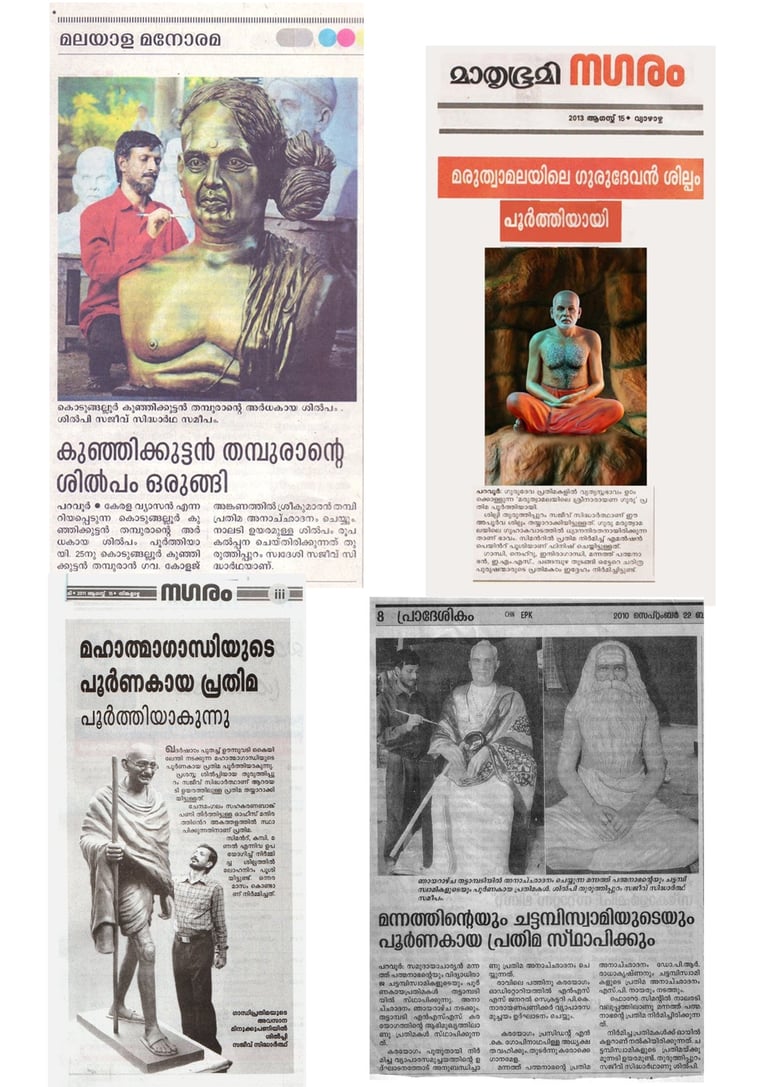
Over more than three decades, he has worked across a range of materials including bronze, ferro-cement, cement relief, and terra cotta. Through these mediums, he has shaped figures that reflect shared human values and collective consciousness. A recurring subject in his work is Mahatma Gandhi — approached not as repetition, but as meditation. From Gandhi at Work to recent meditation-style installations across Kerala, these sculptures seek to capture stillness, humility, and inner strength. In his hands, simplicity becomes powerful, and quietness transforms into monument.
Sajeev Sidharths Works.
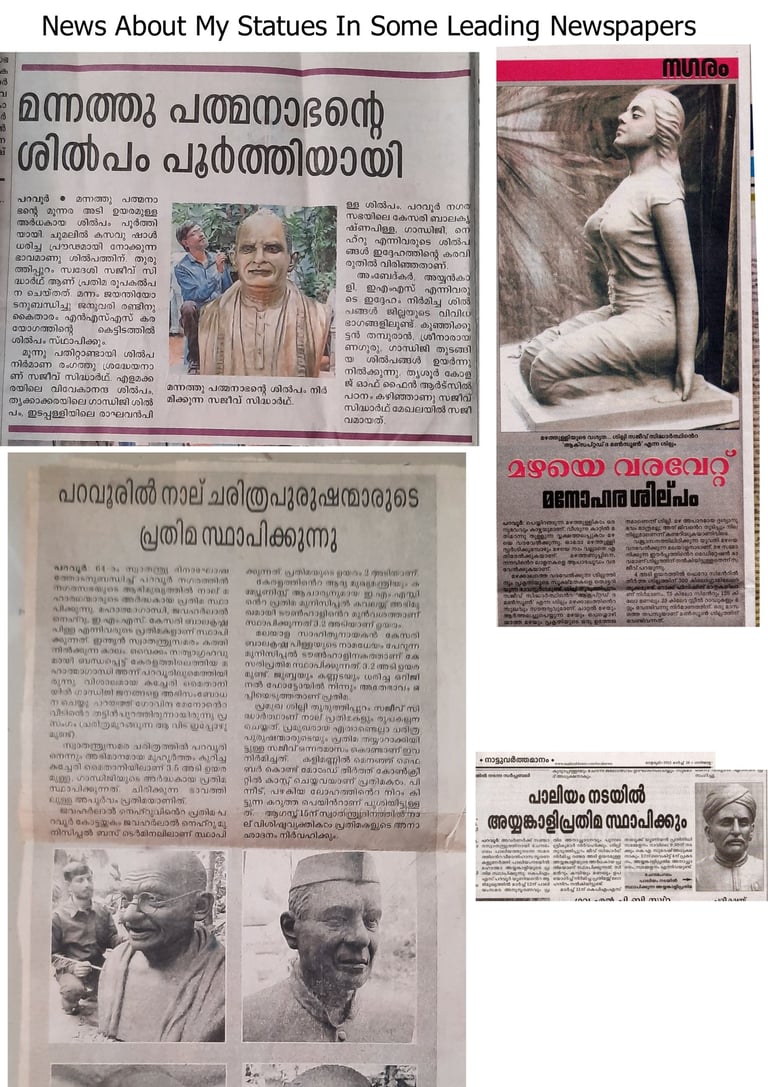
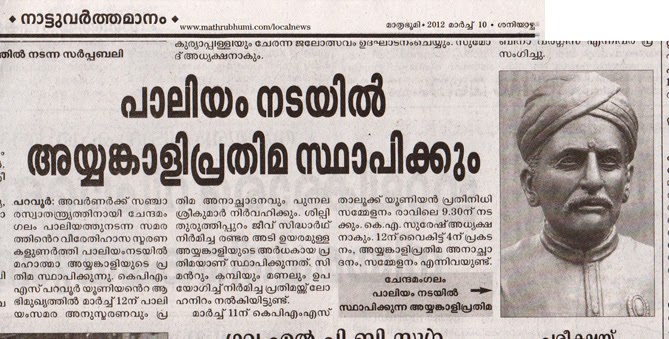
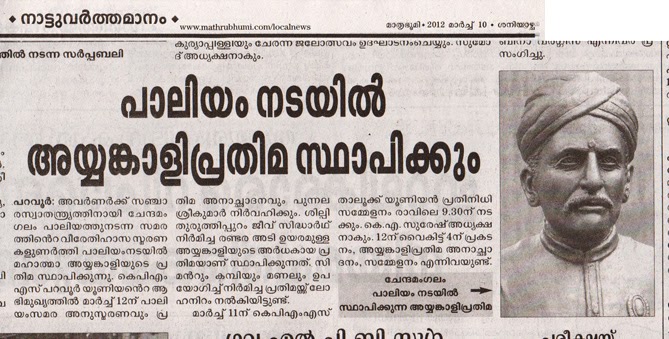
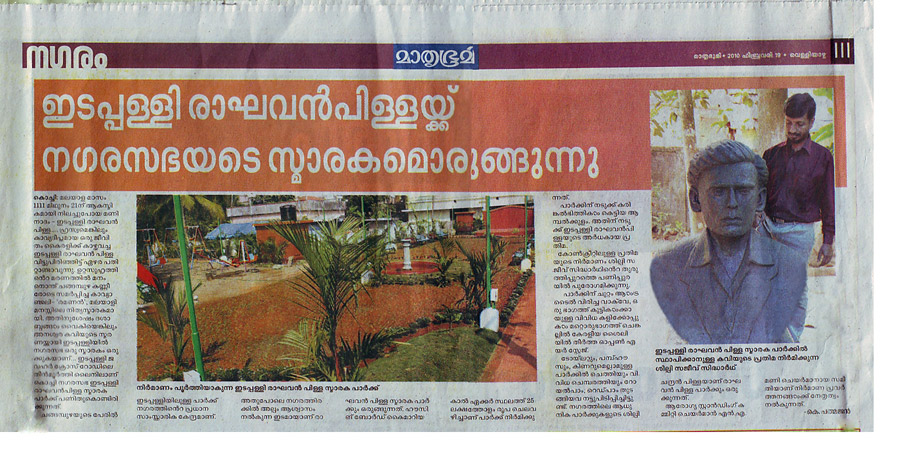
Figures such as Swami Vivekananda, Sree Narayana Guru, Mannathu Padmanabhan, Pandit Karuppan, Jawaharlal Nehru, and Dr. B. R. Ambedkar entered sculptural space not merely as historical likeness, but as ideas embodied. Installed in schools, colleges, panchayats, hospitals, NSS Karayogams, and SNDP units, these statues stand as quiet educators — forms that speak without voice.
Monumental works at Ahalya Campus in Palakkad,Kerala — Interpretation of Sight, Unbearable Lightness of Being, and Experiment with Truth — extend beyond portraiture into philosophical terrain. Scale becomes contemplation. Structure becomes metaphor. Material becomes language.
Terra cotta explorations, including the towering Coconut Gambler and the Penguin Family installation, return to earth itself — reaffirming a relationship with tradition, craft, and elemental memory. In these works, clay carries both fragility and permanence.
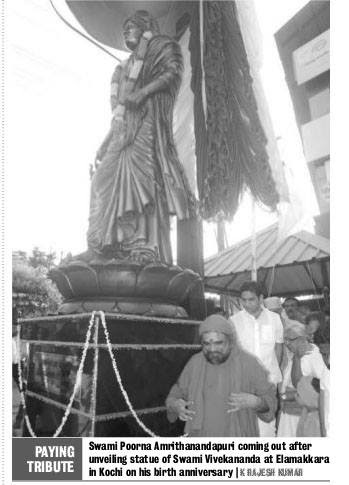
The ongoing years continue this unfolding narrative: meditation-style Gandhi statues across Kerala; Swami Vivekananda near the Vivekananda Chair at St. Joseph’s College, Moolamattom and Elamakkara; churchly figures for Little Lourdes Mission Hospital; reliefs of Lord Krishna in private spaces; statues for NSS and SNDP institutions; and ongoing works including a full-size Dr. B. R. Ambedkar and a bronze P. R. Sastri.
Alongside sculpture, literary expressions and reflections on Edakkal cave art reveal an awareness of lineage — an understanding that every carved surface belongs to a longer human story.
In the works of Sajeev Sidharth, solidity meets silence. Monument meets humility. The human figure becomes both memory and mirror. Rooted in Indian cultural soil yet reaching toward universal human values, the sculptures stand as gestures of remembrance — and as invitations to reflection.
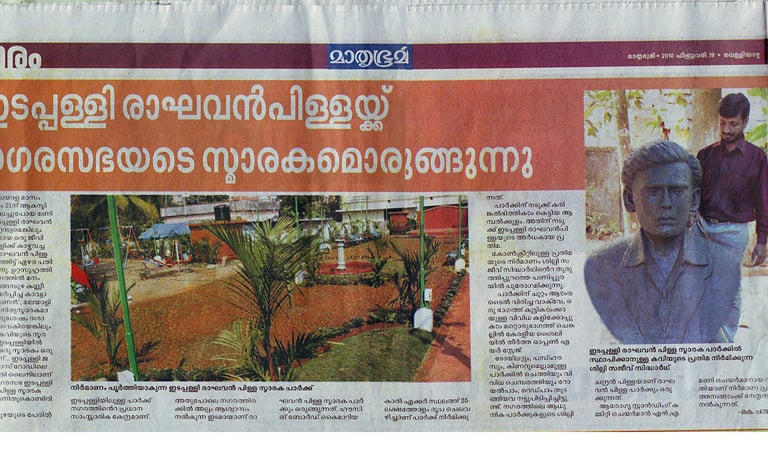
Media
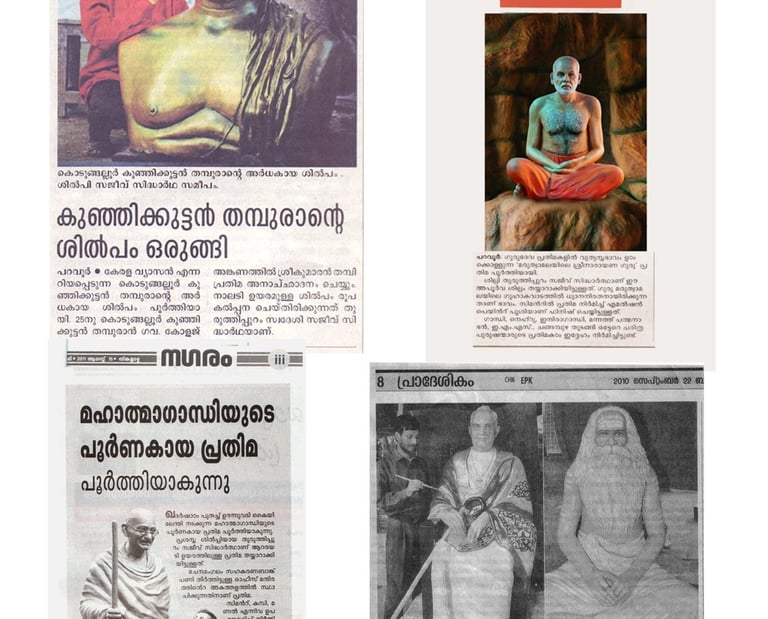
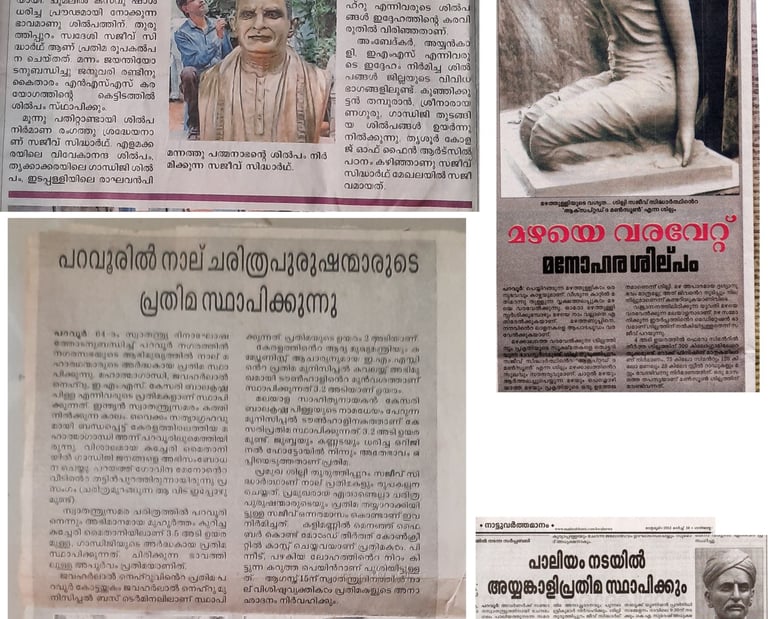
With 35 years of shaping stone and wood, each sculpture tells a story rooted in Kerala's rich traditions.
Contact
Reach out for commissions or questions
Phone
sajeevsidharth@gmail.com
+91 984 66 50 350
© 2026. All rights reserved to www.sajeevsidharth.com
Quick Links